
Table of Contents
A full size charter bus seats 49 to 57 passengers, and 55 or 56 charter bus seats is the most common layout. In practice that means about 14 rows of four seats, two on each side of a center aisle. Smaller charter buses seat 14, 24, or 40.
What actually fits on the bus depends on the restroom, the luggage, and how many people are really coming.
Charter bus seats by vehicle size
The first four rows are the Garas fleet. The last two are industry ranges.
| Vehicle | Seats | Typical use |
|---|---|---|
| 14 passenger bus | 14 | Wedding parties, small corporate groups, airport runs |
| 24 passenger minibus | 24 | Sports teams, church groups, shorter local trips |
| 40 passenger bus | 40 | Class trips, mid size corporate events |
| 56 passenger coach | 56 | Full grade levels, large events, long interstate trips |
| Industry minibus range | 15 to 35 | Varies by manufacturer |
| Industry full size range | 49 to 57 | Depends on restroom and layout |
What 56 passengers actually looks like
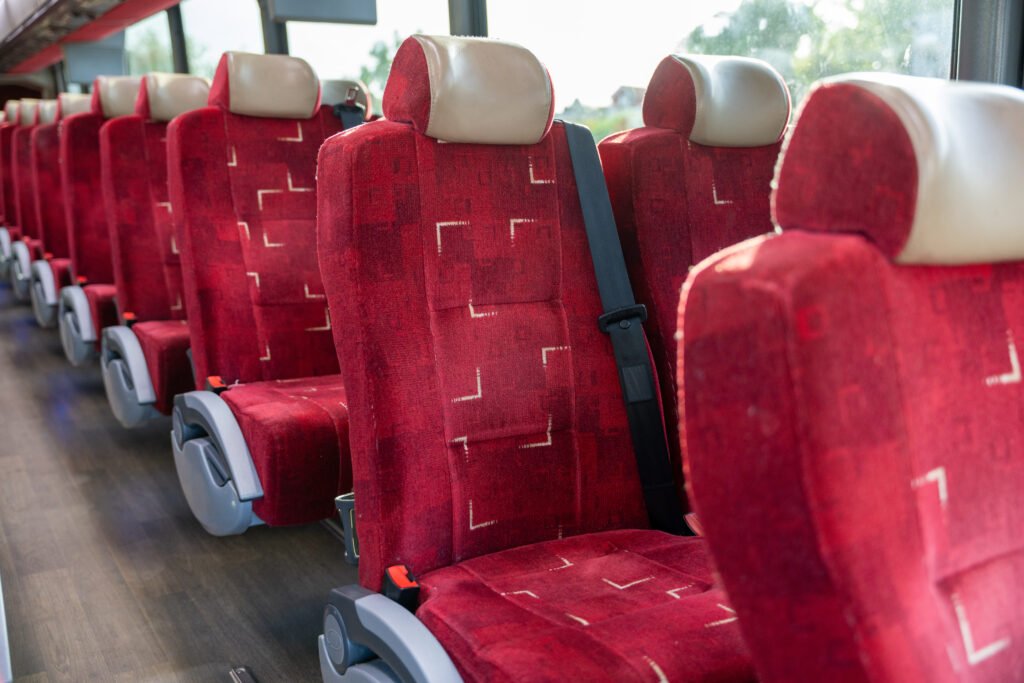
A 56 passenger coach has about 14 rows of four seats. Each seat is typically 17 to 20 inches wide, with roughly 28 to 32 inches from one row to the next. That is close to an airline economy seat.
The front rows sway the least and suit anyone prone to motion sickness. The middle rows sit between the axles and ride the smoothest. The back row shares a wall with the restroom, which is why it fills last.
A 56 passenger coach seats 56 people comfortably. It seats them less comfortably when each one brings a carry-on and someone brings a tournament trophy. Plan accordingly.

What reduces the seat count on a coach
The listed number is the maximum. Three things can bring it down:
- A restroom. It usually takes the space of 2 to 4 seats at the back.
- Wheelchair positions. Each securement area replaces seats that fold up or come out.
- Executive or VIP layouts. Tables and wider 2 and 1 seating can drop a full size coach into the 40s.
Federal rules on accessible over-the-road buses require operators to provide an accessible coach when a passenger needs one. We built wheelchair-accessible buses into the core Garas fleet because of school trips. Students who use wheelchairs go on field trips too, and an inaccessible fleet means someone stays behind. (We mention this because, in this industry, it is apparently still worth mentioning.)
If anyone in your group uses a wheelchair, say so when you ask for a quote. It changes which vehicle we send and how many seats it has.
Listed capacity vs. your real headcount
The seat count is a hard ceiling. Your headcount is rarely final when you book.
Chaperones, coaches, a photographer, and a tour guide all need seats too. The driver does not count against the 56. Add about 10 percent to your confirmed headcount for late additions.
The opposite mistake is more common. Most groups book the wrong bus size because the biggest one feels safer. A 56 passenger coach running at 40 percent capacity costs about twice as much as the 24 passenger minibus that would have done the job. If your group is under 40 people, you probably do not need a 56 passenger coach. Our guide to choosing the right bus size and amenities walks through the cutoffs, and the charter bus pricing guide shows what each size costs.
Luggage changes the math
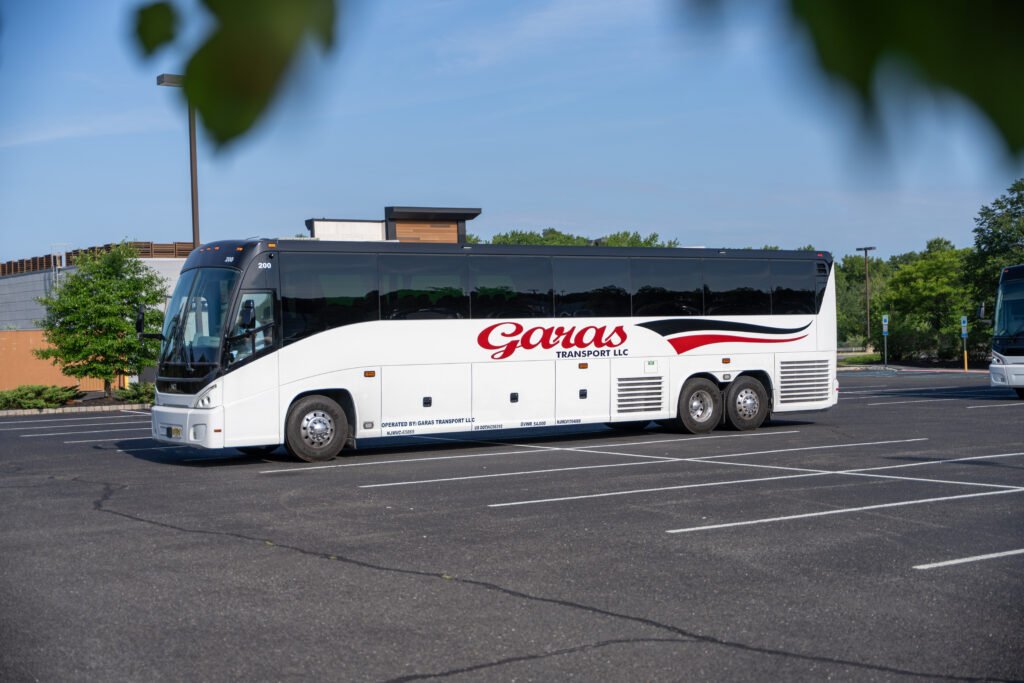
Full size coaches carry luggage in bays under the floor and racks above the seats. On a day trip, that space goes unused. On a three day tournament with equipment bags, it can fill before the seats do.
If your trip runs longer than a day, tell us the number and type of bags when you ask for a quote. Thirty-eight people with hockey gear can fill a 40 passenger bus’s luggage bay long before they fill its seats.

Why the 16 passenger line matters
Seat count also decides who is legally allowed to drive the bus. Any vehicle built to carry 16 or more people, driver included, requires a commercial license with a passenger endorsement. That covers every 24, 40, and 56 passenger bus.
Every Garas driver is CDL licensed and background checked, including the drivers on our 14 passenger vehicles. If an operator cannot tell you which license your driver holds, keep looking. For school groups, our student transportation guide covers the rest of the compliance checklist.If a company cannot answer who owns the vehicle you are about to ride in, that is your answer about how the rest of the trip will go.
Frequently asked questions about charter bus seats
How many seats are in a charter bus?
A full size charter bus (motorcoach) has 49 to 57 passenger seats, with 55 and 56 the most common layouts. Smaller charter buses seat roughly 14 to 40. The driver’s seat is not part of the listed number.
Where is the best place to sit on a charter bus?
Near the front if anyone gets motion sick, since the front rows sway less and look straight down the road. The middle rows, between the axles, ride the smoothest. The back row sits next to the restroom and the engine, which is why it is usually the last row to fill.
How many rows of seats are on a charter bus?
A 56 passenger coach has about 14 rows of four seats, two on each side of the aisle. A coach with a rear restroom usually loses part of the last row. Smaller buses have fewer and sometimes narrower rows.
How are seats numbered on a bus?
Charter buses usually number seats front to back, often starting with the window seat behind the driver. There is rarely assigned seating on a private charter, so the numbers matter mainly when a school or tour group builds a seating chart. Ask the operator for the layout of the exact vehicle if you need one.
Can a charter bus hold 60 people?
A standard coach cannot. The largest common motorcoach layouts top out around 57 seats, and every passenger needs their own seat. A group of 60 needs two vehicles, such as a 56 passenger coach plus a 14 passenger vehicle, or two 40 passenger buses.
Does a school bus hold more people than a charter bus?
On paper, yes. A full size school bus is rated for up to 72 passengers, but that rating assumes three young children per bench. Adults fit two per bench, which brings the real number down to about 48, below a 56 passenger coach.