
Table of Contents
A corporate shuttle service is a vehicle and driver booked for a company’s employees, clients, or event guests either a one-time trip or a recurring program, not a shared or public ride.
The setup is simpler than most people expect for a one-time trip: confirmed headcount, pickup and drop-off addresses, and a departure window are usually enough to get a vehicle assigned within a day. A recurring employee shuttle program takes longer, 2 to 4 weeks because the route has to be built around real commute patterns before the first pickup happens.
Here is what actually goes into booking corporate shuttle service, what it costs, and where companies overcomplicate or underbuild the setup.
What a Corporate Shuttle Service Actually Includes
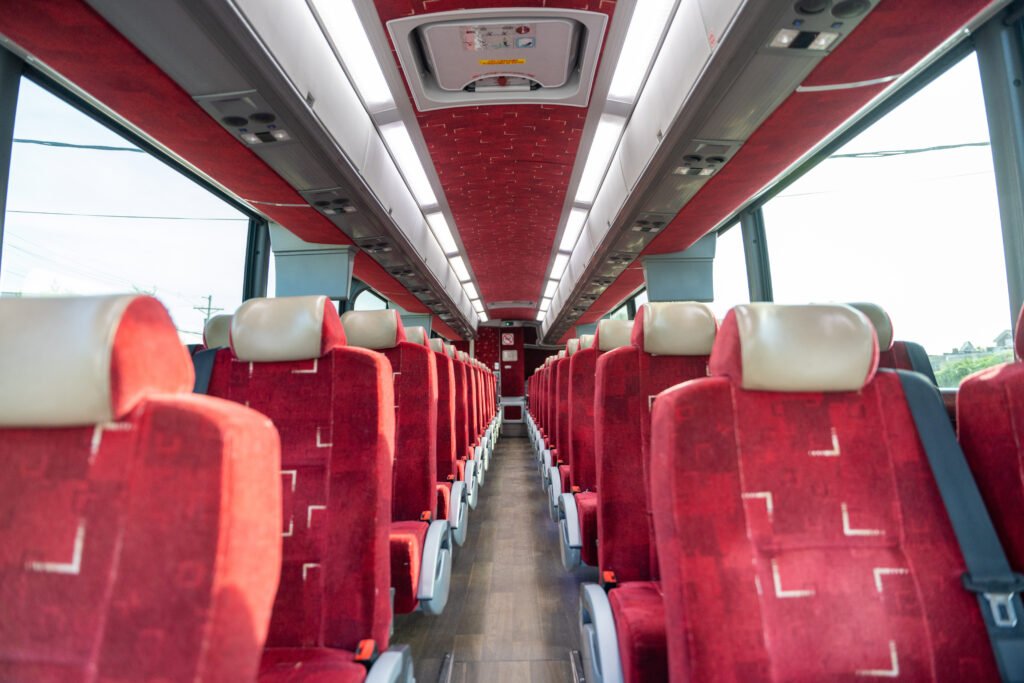
Strip away the marketing language and a corporate shuttle service is three things: a vehicle sized to your group, a CDL-licensed driver, and a confirmed route with pickup and drop-off times.
That covers a single conference shuttle running from a hotel to a convention center. It also covers a daily route moving 40 employees between a park-and-ride lot and a corporate campus. The vehicle category shifts van, minibus, mid-size coach, full coach but the three components stay the same.
What separates a professional setup from an improvised one is what happens around those three things: whether the driver knows the route before trip day, whether there’s a real dispatcher to call if a flight is delayed or a meeting runs long, and whether the vehicle that shows up is the one that was actually booked.
How Corporate Shuttle Service Setup Actually Works
For a one-time booking, setup runs through four steps.
Confirm the headcount. Not “around 20” the actual number of people attending. Corporate groups are notorious for optimistic RSVPs. A shuttle sized for 24 confirmed attendees and a shuttle sized for “probably 20, maybe more” are not the same booking.
List pickup and drop-off addresses. Multiple pickup points three office locations feeding one conference, for example — need to be listed upfront, not added the morning of.
Set the departure and return window. A hard departure time and a realistic return time. If the event runs long, extra hours bill at the hourly rate, so a loose “sometime in the afternoon” return invites overage charges nobody planned for.
Name a day-of point of contact. One person on your side who can reach the driver or dispatcher directly if plans shift. This is the step improvised bookings skip, and it’s the one that matters most when a flight lands late or a meeting overruns.
For a recurring employee shuttle program, add route planning: confirmed stops, a schedule that matches actual shift times, and a trial week before the program locks in. Most providers ask for 2–4 weeks to set this up correctly. Anyone offering a daily program with less lead time is skipping a step that shows up later as a missed pickup.
Which Vehicle Size Fits Your Group
Most groups book the wrong bus size. Organizers round up to the largest available vehicle because it feels safer, and end up with a 56-passenger coach running at 40% capacity for the cost of a full coach. Confirmed headcount before booking fixes this and isn’t a complicated ask.
| Group size | Vehicle | Typical use |
|---|---|---|
| Up to 14 | Passenger van | Small executive team, client visit |
| 15–24 | Minibus | Department offsite, small conference group |
| 25–40 | Mid-size coach | Multi-department event, trade show group |
| 41–56 | Full coach | Company-wide event, large conference block |
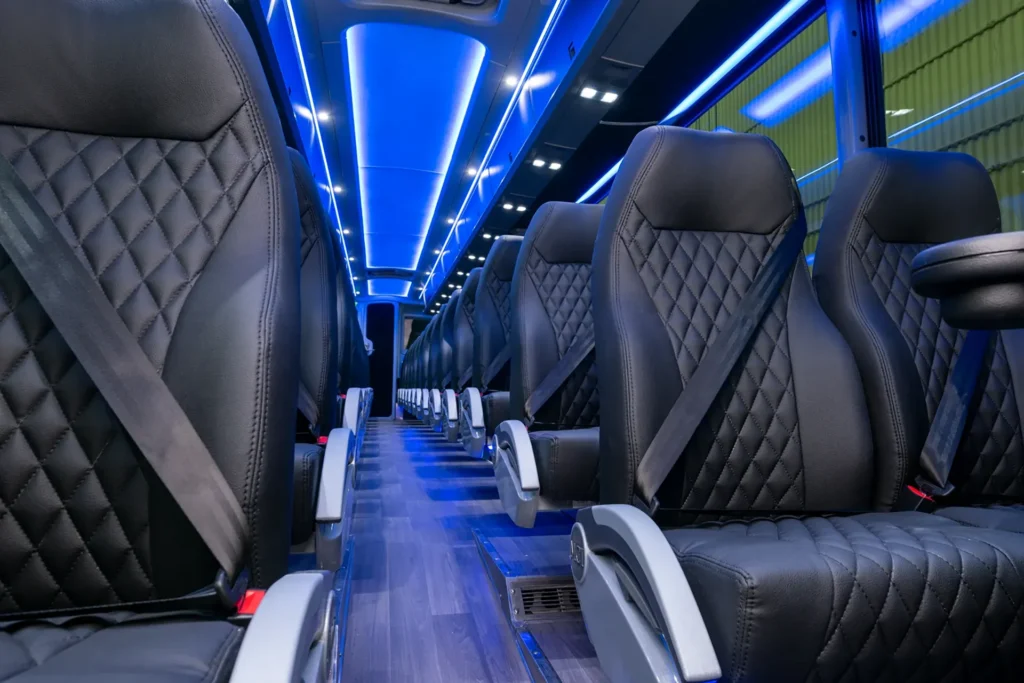
Amenities, WiFi, power outlets, entertainment screens matter on a multi-hour interstate trip. They don’t matter on a 30-minute shuttle between a hotel and a convention center. Choosing a vehicle based on the amenities list instead of the actual route is how companies end up overpaying for a trip that didn’t need any of it. For a full breakdown of what each fleet size fits, see how to choose the right bus size and amenities.
And sometimes the honest answer is that you don’t need a shuttle at all. If your group is 6 or 8 people and everyone can fit into two cars without a coordination headache, a shuttle adds a driver and a fixed schedule to a problem that didn’t need either. Book a shuttle once coordinating separate cars or rideshares becomes the harder part of the trip, not before.
One-Time Shuttle vs. Daily Employee Shuttle Program
These get quoted, staffed, and scheduled differently, and mixing them up is where most corporate transportation requests go sideways.
A one-time corporate shuttle is a single booking for a specific date, an offsite, a conference, a client visit quoted hourly with a 3–4 hour minimum. A daily employee shuttle program is a recurring route with the same stops on a fixed cadence, quoted as a day rate or a contract, because the schedule doesn’t change week to week.
Some companies need both running at once: a daily shuttle between a park-and-ride and the office, plus periodic charter trips for offsites and client events. That’s a normal setup. It works best with one provider handling both, since a dispatcher who already knows your stops and your accessibility requirements doesn’t need to be briefed from zero every time a one-off trip comes up.
Corporate Events, Conferences, and Trade Show Shuttles

Group airport pickups and conference shuttles fail at communication, not at logistics. The bus is almost never the problem. The problem is that nobody confirmed which terminal, which hotel entrance, or what happens if two flights land 30 minutes apart.
For a trade show at the Javits Center or a conference in Midtown, that means confirming exact drop-off and pickup points before the day, not the general address, the specific entrance the group needs. For multi-day events, it means a fixed pickup time each morning and a flexible-enough return window to cover a keynote running long.
Corporate group transportation should not require your own dedicated coordinator. If a shuttle from three office locations to a venue 45 minutes away needs a full-time person managing it, the provider isn’t doing their job. A real operator sends route confirmation, driver contact, and pickup windows the night before. That’s the whole process. Related reading: benefits of charter bus for corporate transportation.
What a Corporate Shuttle Service Actually Costs

Rates scale with vehicle size. A 14-passenger van runs $75–$100/hr. A 24-passenger minibus runs $90–$140/hr. A 40-passenger mid-size coach runs $130–$180/hr. A full 56-passenger coach runs $160–$225/hr. Most one-time bookings carry a 3–4 hour minimum.
A quote should include the vehicle, the driver, fuel for the planned route, and basic commercial insurance. It typically does not include driver gratuity (10–15% is standard), tolls, or wait time beyond the booked window, ask for those as a line item before confirming. For a full rate breakdown by vehicle and trip type, see the complete charter bus pricing guide.
Recurring employee shuttle programs are usually quoted as a flat day rate or per-route rate instead of hourly, since the schedule is fixed and doesn’t fluctuate the way a one-time event does. Some companies also structure employee shuttle costs through a qualified transportation fringe benefit — worth a conversation with your accountant if you’re weighing a shuttle program against a parking stipend.
Who’s Actually Running Your Trip: Owner-Operator vs. Broker
This is the variable that doesn’t show up on a rate sheet, and it’s the one that matters most when something changes on the day of the trip.
Most companies that appear in a corporate shuttle search are brokers. They take the booking, subcontract it to a third-party fleet, and hand off coordination. The number you called has no driver on payroll and no mechanic on staff, so when a vehicle needs to be swapped or a pickup point shifts, there’s nobody on the other end with the authority to fix it in real time.
(An owner-operator, for the record, is a company that owns the vehicles it quotes. That sounds obvious. In this industry, it apparently needs saying.)
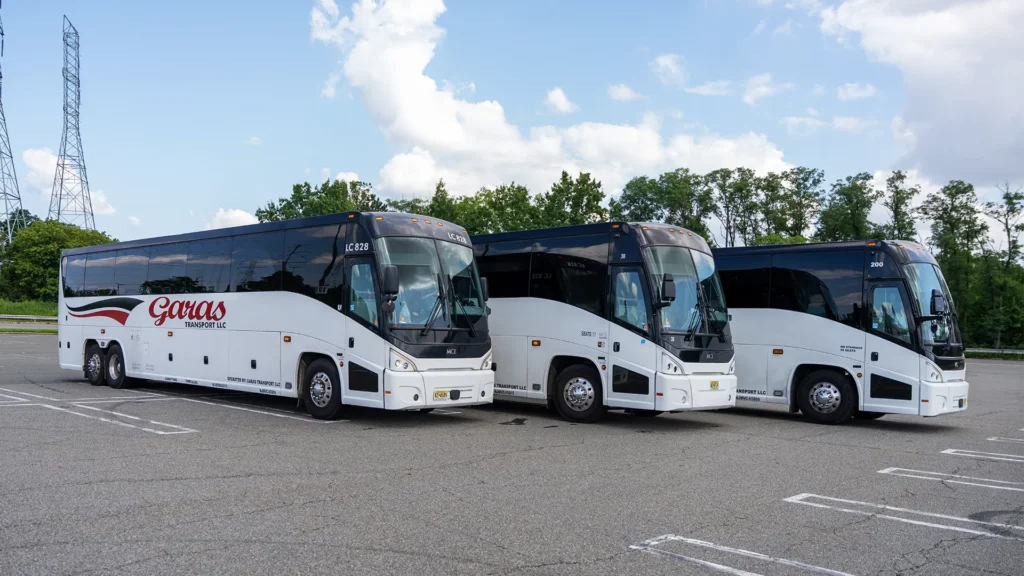
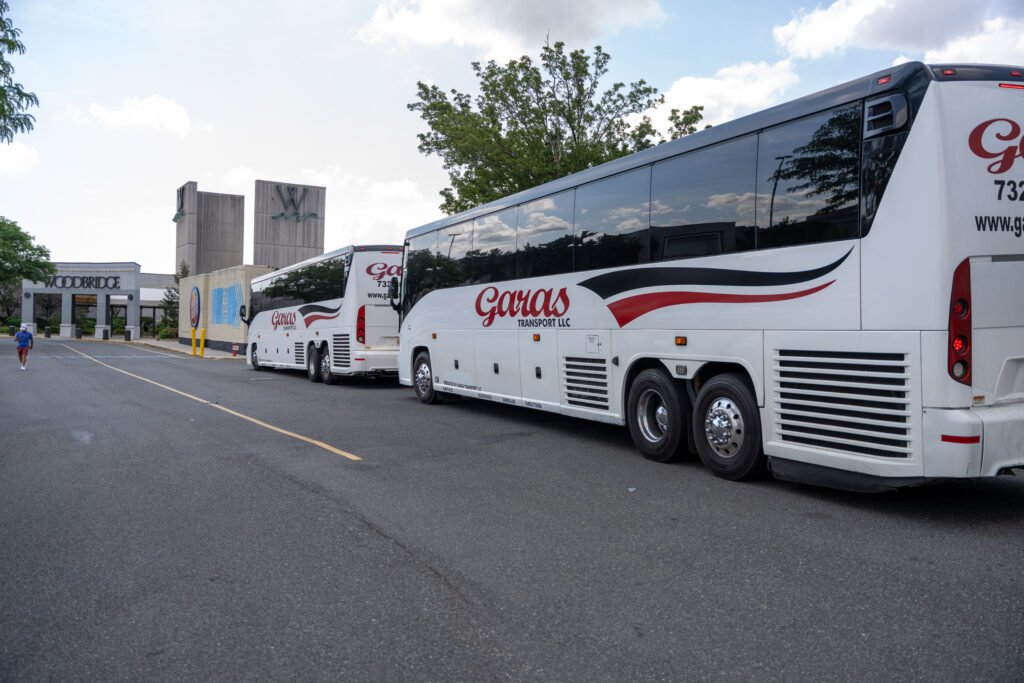
Garas Transport started as an owner-operator in Perth Amboy, NJ, one address, one fleet, no subcontracting. That’s still true with a second location in East Brunswick. When something needs to change on trip day, the person answering the phone has authority over a real vehicle and a real driver, not a queue of subcontractors to check with first. The American Bus Association’s consumer checklist lists what to verify before booking any motorcoach operator — USDOT number, insurance certificate, driver qualification confirmation. Ask every provider for all three. A broker can’t produce them on the spot.
If your corporate shuttle only ever needs to run once, on a route with no surprises, the difference may never come up. Most trip days aren’t that clean.
Frequently Asked Questions
What is a corporate shuttle service?
A corporate shuttle service is a vehicle and driver booked specifically for a company’s employees, clients, or event guests, instead of a public or shared ride. It covers one-time bookings — an office move, a conference, a client site visit — and recurring programs, like a daily route between an office park and a train station. The vehicle is typically a minibus, mid-size coach, or full coach, sized to the group.
How do I set up a corporate shuttle service for my company?
For a one-time trip, an operator needs three things: confirmed headcount, pickup and drop-off addresses, and a departure and return window. That gets a vehicle assigned, usually within a day. A recurring employee shuttle program takes longer — 2 to 4 weeks — because the route needs to be built around real commute times and confirmed stops before the first pickup.
How many employees fit on a corporate shuttle?
It depends on the vehicle. A 14-passenger van fits 14 people, a 24-passenger minibus fits 24, a 40-passenger mid-size coach fits 40, and a 56-passenger coach fits 56. Confirmed headcount — not an estimate — determines which one is the right call. A group of 18 does not need a 40-passenger coach, and booking one wastes budget without adding capacity anyone uses.
How much does a corporate shuttle service cost?
Most one-time corporate shuttle bookings in NJ/NY/PA run $75–$100/hr for a 14-passenger van, $90–$140/hr for a 24-passenger minibus, and up to $225/hr for a full 56-passenger coach, with a 3–4 hour minimum. Recurring daily programs are typically quoted as a flat per-day or per-route rate instead of hourly, since the schedule is fixed.
Can a small business book a corporate shuttle, or is this only for large companies?
Small businesses book corporate shuttles regularly — a 15-person team headed to a conference needs the same vehicle-and-driver setup as a 200-person office, just a smaller one. The minimum threshold is really about group size versus a car or rideshare, not company size. If a car service would require four or five separate vehicles, a shuttle is usually the more coordinated option.
What’s the difference between a one-time corporate shuttle and a daily employee shuttle program?
A one-time corporate shuttle is a single booking for a specific date — a conference, an offsite, a client visit — quoted by the hour. A daily employee shuttle program is a recurring, scheduled route running the same stops on a fixed cadence, quoted as a day rate or contract. The vehicles can come from the same fleet. The commitment and the quote structure are what differ.
Do corporate shuttle drivers need a special license?
Yes. Any driver operating a vehicle with 16 or more passengers needs a Commercial Driver’s License with a passenger endorsement at minimum — CDL-B for most mid-size coaches, CDL-A for certain larger configurations. Ask any operator to confirm driver licensing before you book. A legitimate operator answers this without hesitation.